Toppy swapped its self-built WMS for Ceyenne
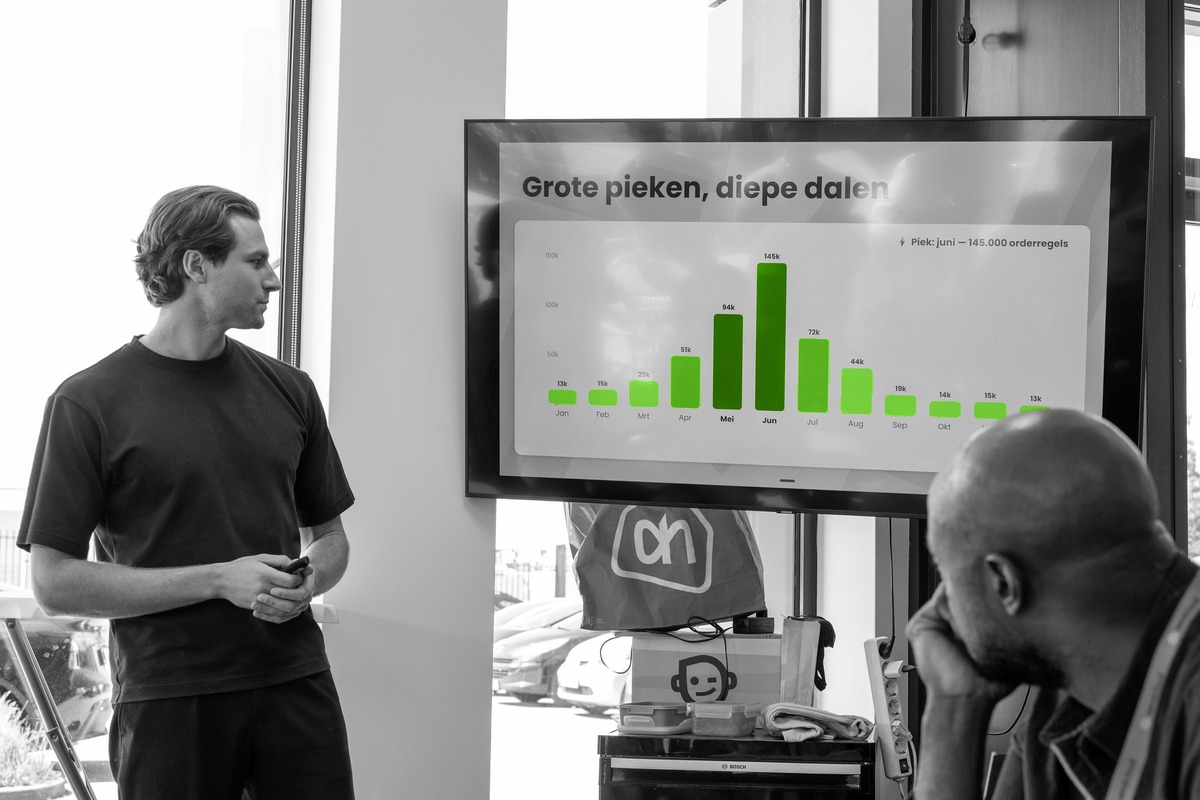
In winter the warehouse handles 13,000 order lines, in summer 145,000
Toppy started in 2009 by building professional swimming pools and later translated that product knowledge into a webshop. The company now supplies consumers and business customers from a single logistics center of 12,000 square meters with tens of thousands of different products in the range. The season sets the rhythm. In winter around 13,000 order lines a month go through, in summer 145,000. On a winter working day 10 people are on the floor, on a peak day 60. On the busiest day so far, 26 full trucks drove away.
"When you walk in here in winter, you think: what kind of mom-and-pop webshop is this, because nobody is walking around", says Jasper. "In summer we are a well-oiled machine of a company of serious size."
The peak cannot be moved. Between January and March the stock comes in, after which there are 10,000 pallets in the warehouse and another 5,000 externally. All of them have to go out again in the months that follow. April, May and June are therefore elite sport, because in those months Toppy makes the most of the peak and helps as many customers as possible. Many of them get to know the company precisely then, so the experience they take away determines whether they come back next season.
Two acquisitions made building it themselves too risky
Growth came in waves. The corona years gave a big push, because everyone put their money into the garden. When the market fell back in 2023, Toppy used that downturn to buy. The company acquired two parties, including the largest competitor in above-ground pools.
The acquisitions made the operation considerably more complicated. Many more pallet products were added and everything now had to leave from a single warehouse. Toppy had always built everything itself, right up to its own WMS. As long as the company stayed small that worked fine, but in summer the entire operation depended on its own development team.
Toppy had mechanized packing earlier, still on that own WMS. Adding an extra picker takes little effort, whereas picking up, folding, filling and taping a box takes time. That was the bottleneck. "Where the theory says you cannot automate for a peak because it is too expensive, we actually have to", says Jasper. "Otherwise it is not feasible operationally."
For the WMS Toppy chose a different route. "We are a young company with a lot of people who can work very hard, but who don't necessarily have the experience to say: this is the right way", says Jasper. Bringing in outside knowledge proved wiser than building it all over again themselves.
Toppy chose Diract for functional fit and the click
A WMS affects the entire operation, so Toppy had guidance during the selection. Of the roughly 45 WMS suppliers in the Netherlands, ten were left that matched Toppy's logistics profile. Jasper spoke to five of them and two parties were followed by a deep dive. Toppy chose Diract.
"The deciding factor was a good combination of functional fit and the click. We are a pragmatic company, it simply has to work, because we have to be ready before summer", says Jasper. "With many WMS suppliers everything is a bit dusty and corporate, and everything takes long. The type of consultant who just drops by on the floor is not our thing. At Diract we felt the same can-do mentality."
The experience Diract brought weighed just as heavily. The in-house team always built what Toppy came up with itself, whereas Diract could push back.
"With our own WMS we always did it the way we thought was right. Diract has already done this at dozens of other warehouses. That means they can also challenge us when we request something."
Three months of implementation instead of six to nine
Toppy therefore deliberately started small. First the standard order flow had to be right, where an ordered product leaves the warehouse without errors. That happy flow went live first, with its own OMS layer already connected. The exceptions followed step by step. Toppy is still working on that expansion.
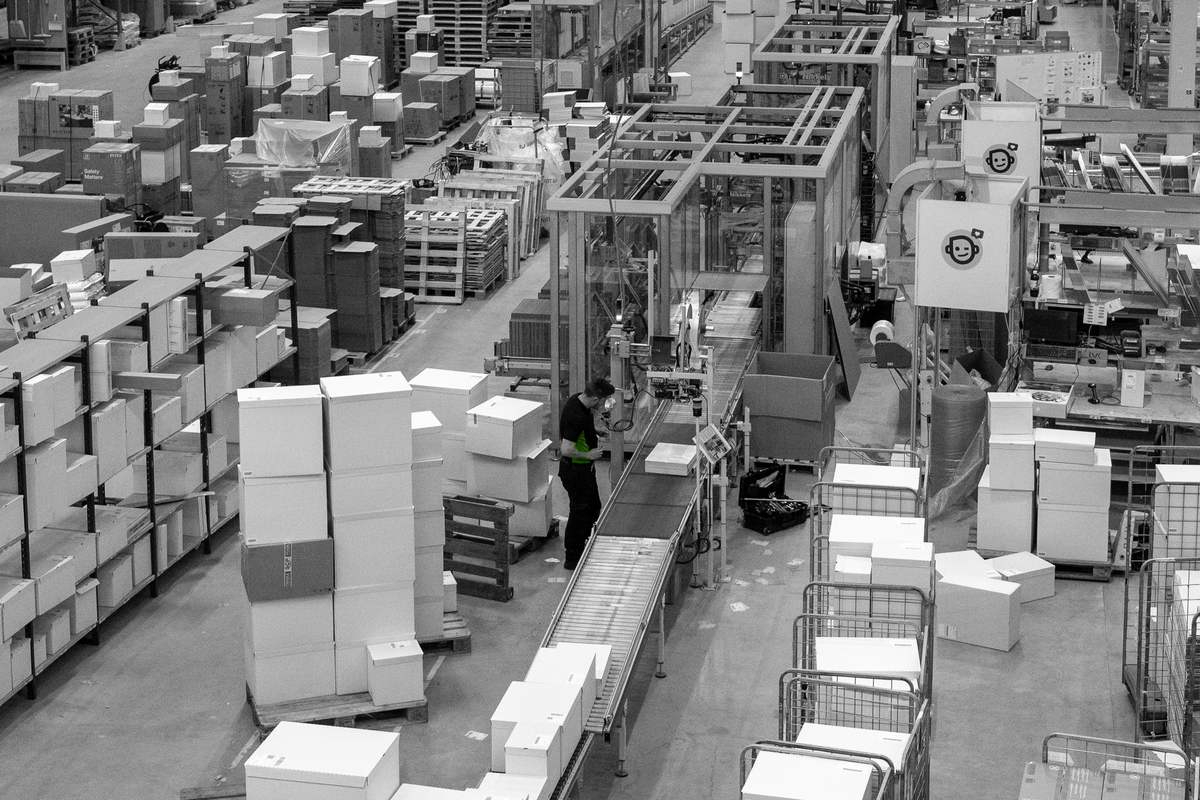
The entire operation now runs on Ceyenne, from incoming goods to the parcel that drives away. The range runs from an o-ring for a pump to a complete heat pump. Ceyenne controls the pick orders, distributes the products over the compartments on the pick cart, determines which of the four box sizes fits the order and links the correct shipping label. The packing line also receives its instructions from Ceyenne.
The first summer peak did not go flawlessly
"An error that occurs once a day in winter happens twenty times a day in summer", Jasper explains. "And from April we double every month. You can test that kind of process, but at that volume it is still a completely different operation."
When those exceptions piled up, Diract joined in and resolved them while the peak simply carried on. Commercially the summer was a success, operationally Toppy sometimes lagged behind the commercial side. Both parties draw the same lesson: next time start even smaller and keep testing longer before the peak starts.
The gain lies in software Toppy no longer builds itself
Productivity is currently roughly at the level from before the switch. The self-built WMS actually worked well in some respects. The gain lies elsewhere. Toppy no longer has to build its own logistics software in order to keep growing.
Functionality that is already in Ceyenne can be switched on and configured by Diract, where Toppy used to need months of development time. "When we have a request now, Diract simply has a large development team that can build it", says Jasper. "With us it was always under capacity, because those people also have to work on the webshop."
This was no longer the right moment to build it ourselves. We had to bring knowledge in-house and get a WMS from outside.
New staff are up and running within a day
Every WMS says it is simple. With us Ceyenne really works that way: someone is at work within a day.
Location guidance and a second warehouse are the next step
Want to know more?